Palletization is placing merchandise on wooden, plastic, or metal pallets to stack, move, and store it all at once. It reduces loading and unloading times, saves warehouse space, and prevents damage.
If you work in the logistics industry or simply need to ship or store products, it is very likely you have heard of palletization. Palletization is a method for storing and transporting goods used to efficiently organize, protect, and handle large quantities of products. In this guide, we will explain everything you need to know about palletization, from its definition to the different types of pallets and storage systems available.What is palletization?
Palletization is the process of organizing products on pallets, which are wooden, plastic, or metal structures that allow for the efficient stacking and moving of large quantities of goods. Palletization is a very popular technique in the logistics industry because it allows for reduced loading and unloading times, improved storage efficiency, reduced product damage, and simplified transport of large quantities of products.Advantages of palletization
Palletization has several advantages compared to other methods of storing and transporting goods. Some of the main advantages are:- Increased efficiency: Palletization allows for reduced loading and unloading times, which increases efficiency in the transport and storage of goods.
- Greater protection: Pallets protect products from potential damage and keep them stable during transport.
- More storage space: Palletization allows products to be stacked efficiently, which makes better use of storage space.
- Greater safety: Pallets facilitate the handling of products and reduce the risk of injury during loading and unloading.

Types of pallets
There are different types of pallets available, each with its own advantages and disadvantages. Some of the most common types of pallets are:- Wooden pallets: Wooden pallets are the most common and economical. They are strong and durable, but can be heavy and difficult to clean.
- Plastic pallets: Plastic pallets are lightweight, easy to clean, and moisture-resistant, but they are also more expensive than wooden pallets.
- Metal pallets: Metal pallets are the strongest and most durable, but they are also the most expensive and heavy.
Pallet storage systems
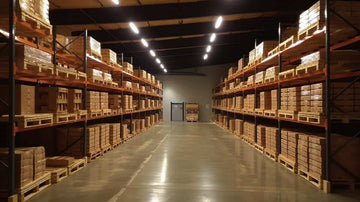
There are different storage systems used in conjunction with pallets to maximize efficiency in the storage and transport of goods. Some of the most common storage systems are:- Pallet racks: Pallet racks are structures used to store pallets efficiently. There are different types of racks, such as selective racks, push-back racks, and double-deep racks.
- Pallet shelving: Pallet shelving is a storage system used to store pallets vertically, which allows for better utilization of vertical warehouse space. There are different types of pallet shelving, such as selective racking, compact racking, drive-in racking, and push-back racking. Each type of pallet shelving has its own advantages and disadvantages, so it is important to choose the one that best suits the needs and characteristics of the products to be stored.
- Cantilever: The cantilever storage system is ideal for storing long and heavy objects, such as pipes and beams.
- Drive-In/Drive-Through: The Drive-In/Drive-Through storage system is ideal for high-density, low-turnover products.

How to palletize correctly
To palletize correctly, it is important to follow certain steps and techniques to prevent product damage and ensure safe and efficient handling. Some steps to follow are:- Choose the right type of pallet: Choosing the right type of pallet is key to ensuring the safety and protection of the products. It is important to choose a pallet that is suitable for the weight and dimensions of the products.
- Place products correctly: Placing products correctly on the pallet is important to ensure stability and safety during transport and storage. It is recommended to place products uniformly and in a balanced manner.
- Use suitable packaging materials: Using suitable packaging materials, such as bubble wrap and cardboard, is important to protect products during transport and storage.
Summary:
Palletization is a very useful technique for storing and transporting goods in the logistics industry. It allows for reduced loading and unloading times, improved storage efficiency, reduced product damage, and simplified transport of large quantities of products. It is important to choose the right type of pallet and use the appropriate storage systems to maximize efficiency and safety in product handling.FAQs Frequently Asked Questions
- What are the advantages of using pallets in the logistics industry?
- What are the different types of pallets available?
- What are the most common storage systems used in conjunction with pallets?
- How do you palletize correctly?
- Why is it important to palletize correctly?