Bubble wrap works – we're not going to lie, we sell it. But more and more customers are asking us for the same thing: "I want my package to arrive just as protected, with less plastic or none at all." Sometimes out of conviction, sometimes because their end customer demands it, and lately also because European regulations are tightening.
The good news: there are alternatives that truly protect. The honest news: not all of them work for everything. Here's what we recommend for each case, starting with our paper and cardboard packaging section.

Why look for an alternative (beyond conscience)
Three practical reasons:
- Monomaterial recycling. If both the box and the filling are made of paper and cardboard, your customer throws everything into the blue bin without thinking. No separating, no doubts. We explain how this circuit works in how cardboard boxes are recycled.
- Regulations. The European PPWR regulation sets phased reduction and recyclability targets for packaging – if you sell online, it affects you: PPWR guide.
- Brand experience. An unboxing with kraft and cardboard communicates care. Plastic, depending on the audience, detracts.
The alternatives, one by one
Crinkled kraft paper
The wildcard. Hand-crinkled or machine-crinkled, it fills gaps and cushions medium impacts. Recyclable, cheap, and fast to use. Its limitation: for strong impacts on hard surfaces, it protects less than bubble wrap. What it is and why it's so widely used: our guide to kraft paper.
Corrugated cardboard in rolls
Our favorite for wrapping: it adapts, adds structure, and creates a "sandwich" effect for flat items. Ideal for tableware, frames, small furniture. You can find it in 90 cm × 25 m rolls.
Paper and wood wool filling
To immobilize the product inside the box — which is, in reality, half of the protection job. Combined with a snug box, it solves most e-commerce shipments. Options in filling and protection.
Polyethylene foam (the honest nuance)
It's plastic – don't let them sell it as eco-friendly. But it's very thin, highly effective against rubbing and scratches, and allows for much less material to be used than bubble wrap for delicate surfaces. As an intermediate step, it makes sense: what foam is and when to use it.

Quick comparison
| Material | Protection | Recycling | Best for |
|---|---|---|---|
| Crinkled kraft paper | Medium | Blue bin | Filling gaps, non-fragile products |
| Corrugated cardboard | Medium-high | Blue bin | Wrapping, flat items, sandwiching |
| Paper/wood wool filling | Medium | Blue bin | Immobilizing inside the box |
| Polyethylene foam | High against rubbing | Recycling center (plastic) | Delicate surfaces, thin layer |
| Bubble wrap | High against impacts | Recycling center (plastic) | Truly fragile: glass, ceramics |
When bubble wrap is still the best option
Let's be clear: for glass, fine ceramics, valuable electronics, or anything that wouldn't survive a drop from a counter, bubble wrap is still hard to beat for pennies. A broken shipment pollutes more than any bubble wrap: it's manufactured twice, transported twice.
If this is your case, use it well and without excess – types and thicknesses in our guide to bubble wrap – or combine: a first layer of kraft, bubble wrap only where needed, as we do when packaging paintings and mirrors.

How to make the switch without breaking anything
- Classify your catalog into three groups: non-fragile, semi-fragile, fragile.
- Change the easy group first: for non-fragile items, kraft replaces bubble wrap without any risk.
- Perform a real test with semi-fragile items: 20-30 shipments with the alternative and measure breakages. The numbers decide, not intuition.
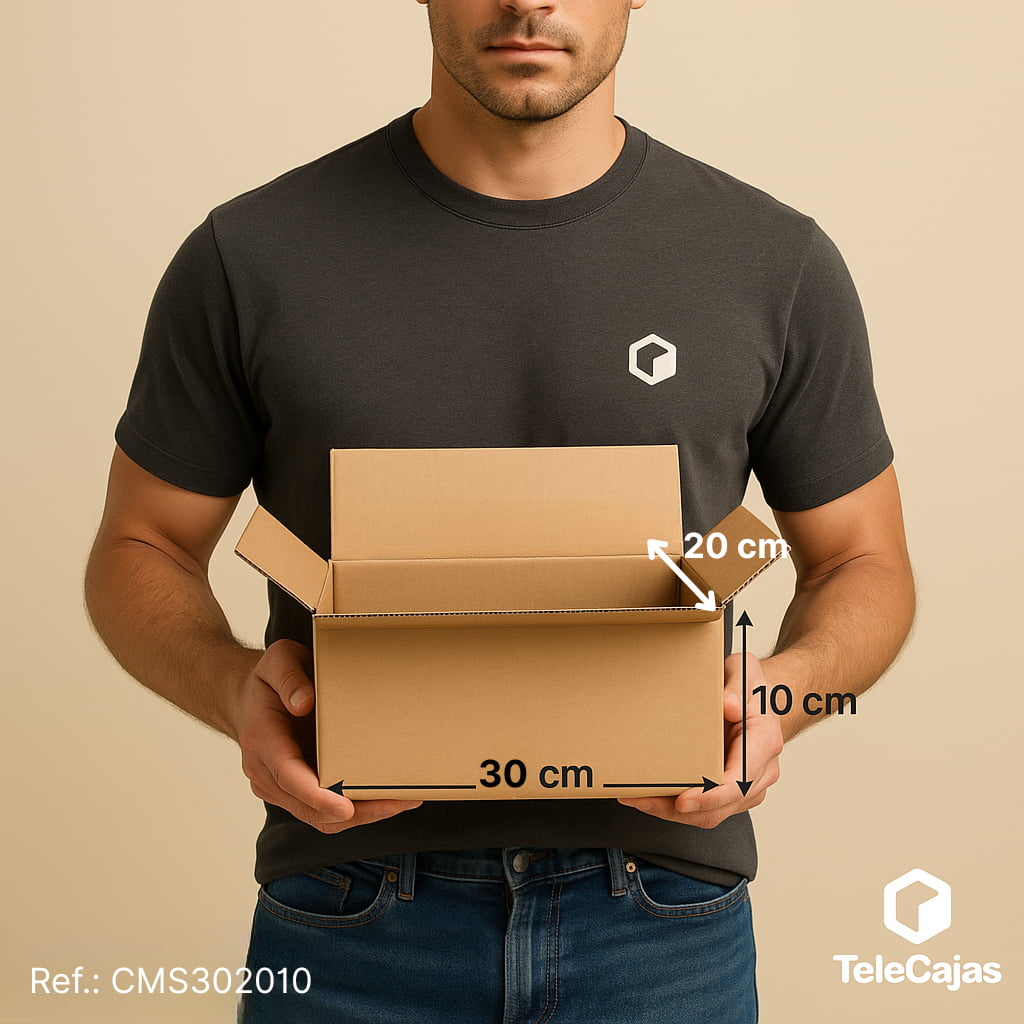
- Adjust the box. Medium protection means a box that immobilizes: review how to choose the right size.
Frequently Asked Questions
Which protects more, kraft paper or bubble wrap?
Against strong impacts, bubble wrap. Against rubbing and for filling gaps, kraft paper performs perfectly well with a better environmental profile. Most e-commerce shipments don't need more than kraft and a well-fitting box.
Is bubble wrap recyclable?
It is theoretically recyclable polyethylene, but it doesn't go into the yellow bin in all municipalities and is rarely recycled in domestic practice. Paper and cardboard, on the other hand, have the blue bin circuit resolved.
What is the cheapest alternative?
Crinkled kraft paper, due to material cost and speed of use. Corrugated cardboard in rolls wins when you also need structure.
What exactly does the European regulation require?
The PPWR sets phased targets for reduction, recyclability, and labeling of packaging throughout the EU. We break it down, with dates, in the PPWR regulation guide.
Try and compare
At TeleCajas, we have both families – paper and cardboard on one hand, bubble wrap on the other – with no minimum order, so you can order a small quantity and test what works with your product. Shipping within 24-48 hours to mainland Spain, the Balearic Islands, and Portugal, free for orders over €50. Questions: +34 665 53 23 58 (WhatsApp).
View paper and cardboard packaging · View filling and protection