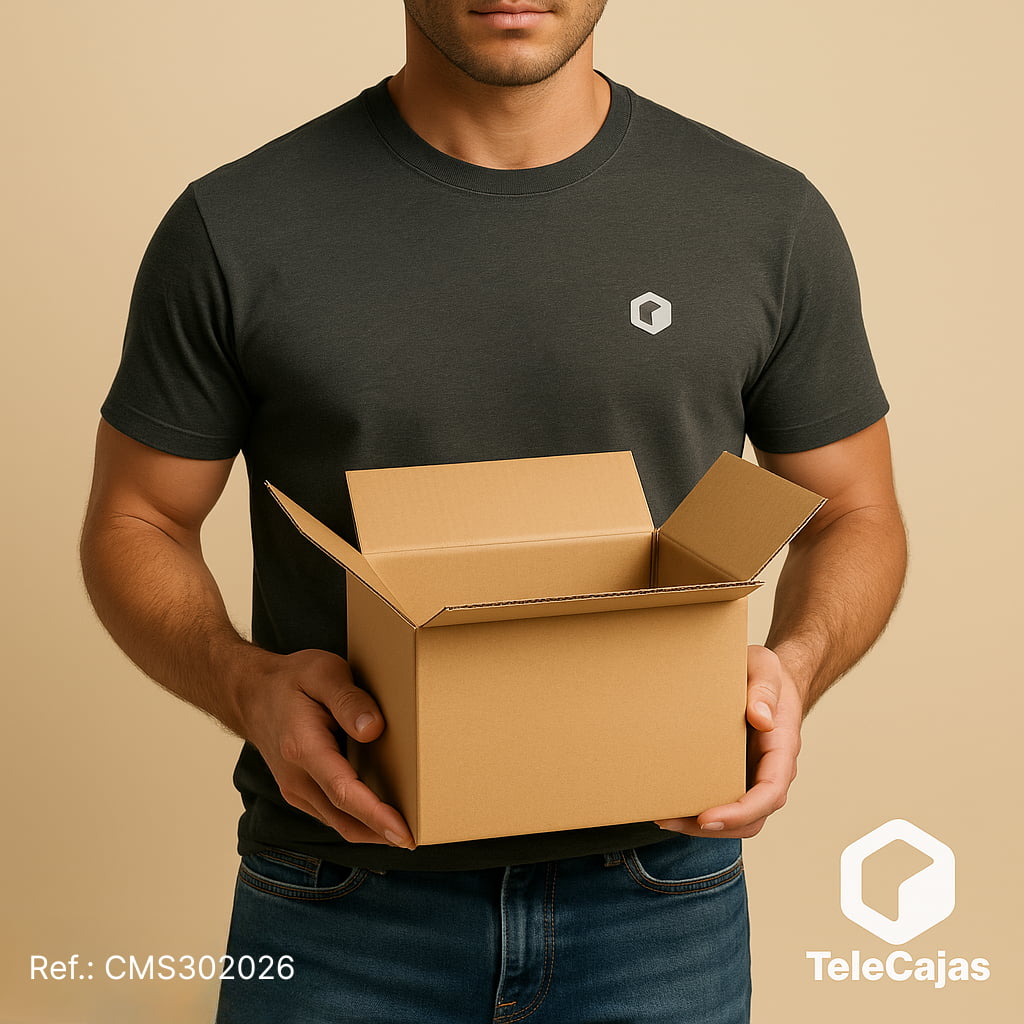
How much does it cost to send a parcel? The short answer: it depends. The long answer: it depends on four very specific things, and one of them — the box you choose — is entirely in your hands.
We've been selling shipping boxes to e-commerce stores and businesses in Spain and Portugal for more than ten years, and this is the question we hear most. So let's answer it properly: what exactly you pay for when you ship, and how to pay less without your parcel arriving in worse condition.

What the price of a shipment depends on
Four factors, in order of importance:
- Parcel size and weight. And careful: the scales don't always win. Carriers charge for whichever is greater, the actual weight or the volumetric weight. We'll look at that shortly.
- Destination. Mainland Spain, the Balearic Islands, the Canary Islands (with customs), Portugal, the rest of Europe… each zone has its own rate.
- Delivery time. 24-hour delivery, 48-72 hours or economy. You pay for urgency.
- How you book it. The same shipment can cost different amounts at the counter, on the carrier's website or through a comparison site. Booking online usually works out cheaper.
In 2026, Correos parcel rates also went up by 3% — the general trend in the sector is upwards, so optimising your parcel pays off more and more.
Volumetric weight, explained in a minute
This is where most people overpay without realising it.
Carriers don't just weigh your parcel: they measure it. Because a van fills up with space before it fills up with kilos. The usual formula is:
Volumetric weight = length × width × height (in cm) ÷ divisor
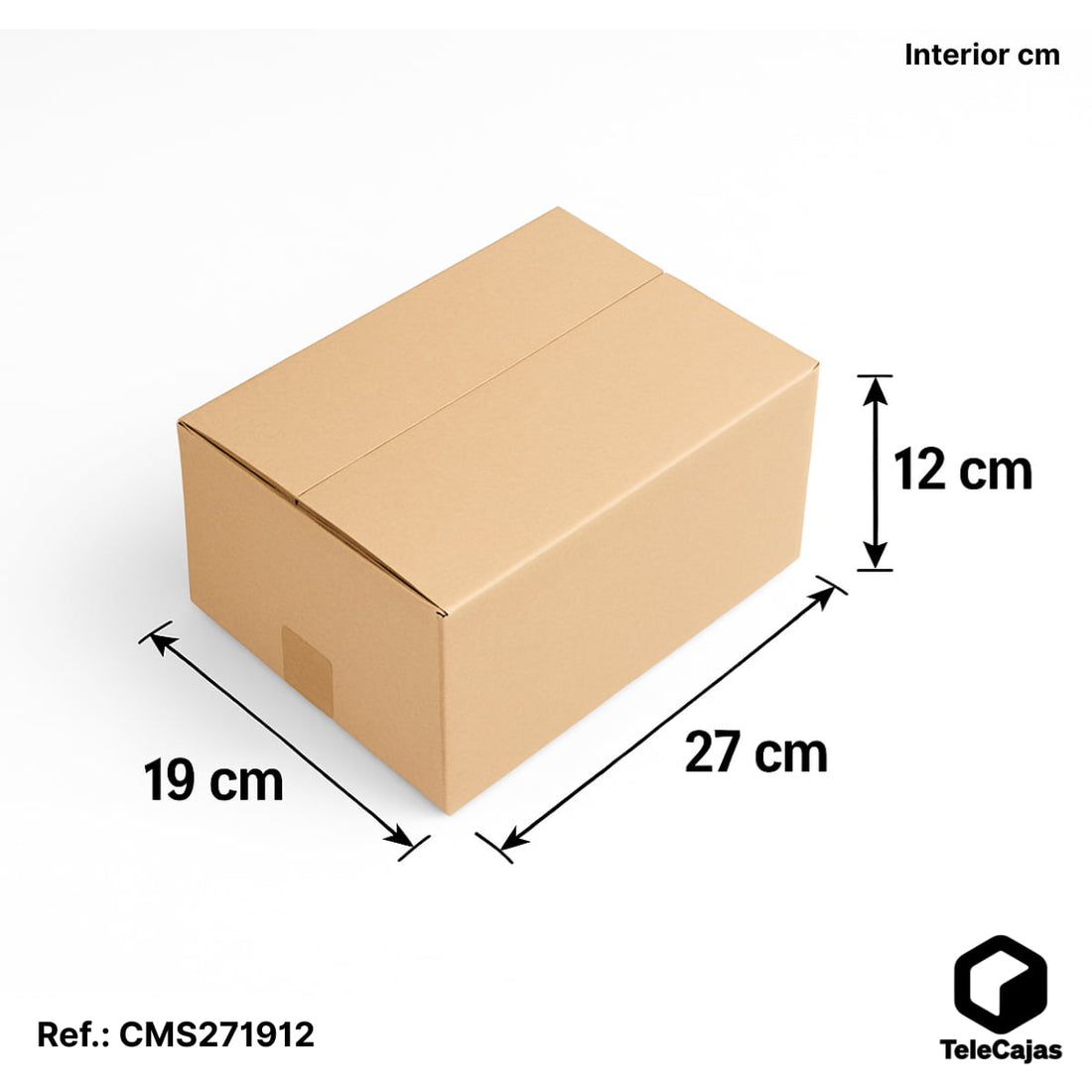
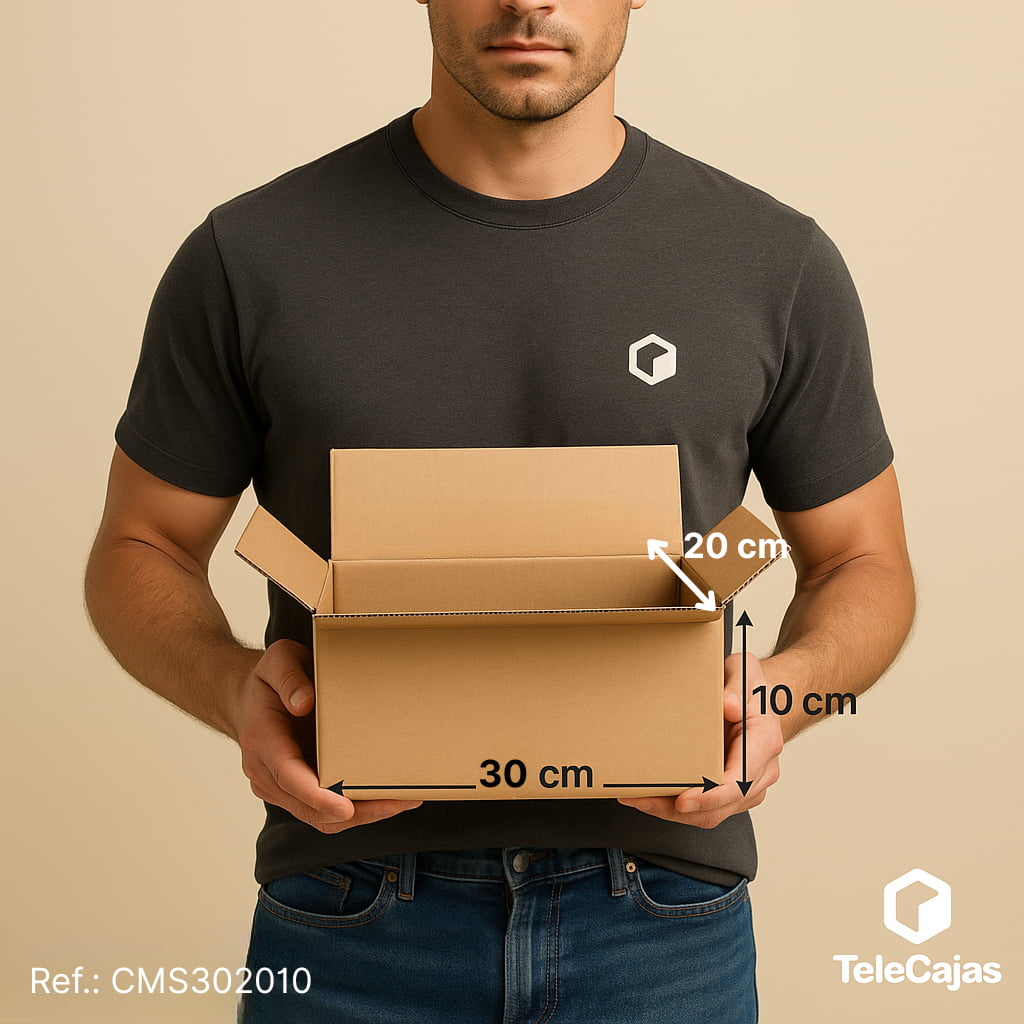
Each carrier uses its own divisor, usually between 4,000 and 6,000. An example with a divisor of 5,000: a 40×30×20 cm box is 24,000 cm³ ÷ 5,000 = 4.8 volumetric kg. If your contents weigh 2 kg, you'll pay as if they weighed 4.8. The box is costing you money.
That's why measuring properly matters so much — we have a quick guide on how to measure a cardboard box and a volume calculator so you don't have to do the maths by hand.
Guide prices (and where to check them)
Without committing to figures that change every January: a small domestic parcel usually costs between €4 and €10 depending on the service and delivery time, and from there it goes up with weight and urgency. Correos' Paq Estándar accepts up to 30 kg; private courier companies (SEUR, GLS, MRW, NACEX…) work in similar ranges with faster delivery.
Three practical tips:
- Always check the current rate on the carrier's website — rates change every year.
- Shipping comparison sites pool volume from many customers and get prices an individual never sees at the counter.
- Delivery to a pickup point is usually cheaper than home delivery.
How to pay less: start with the box
It's the most overlooked lever and the most profitable one:
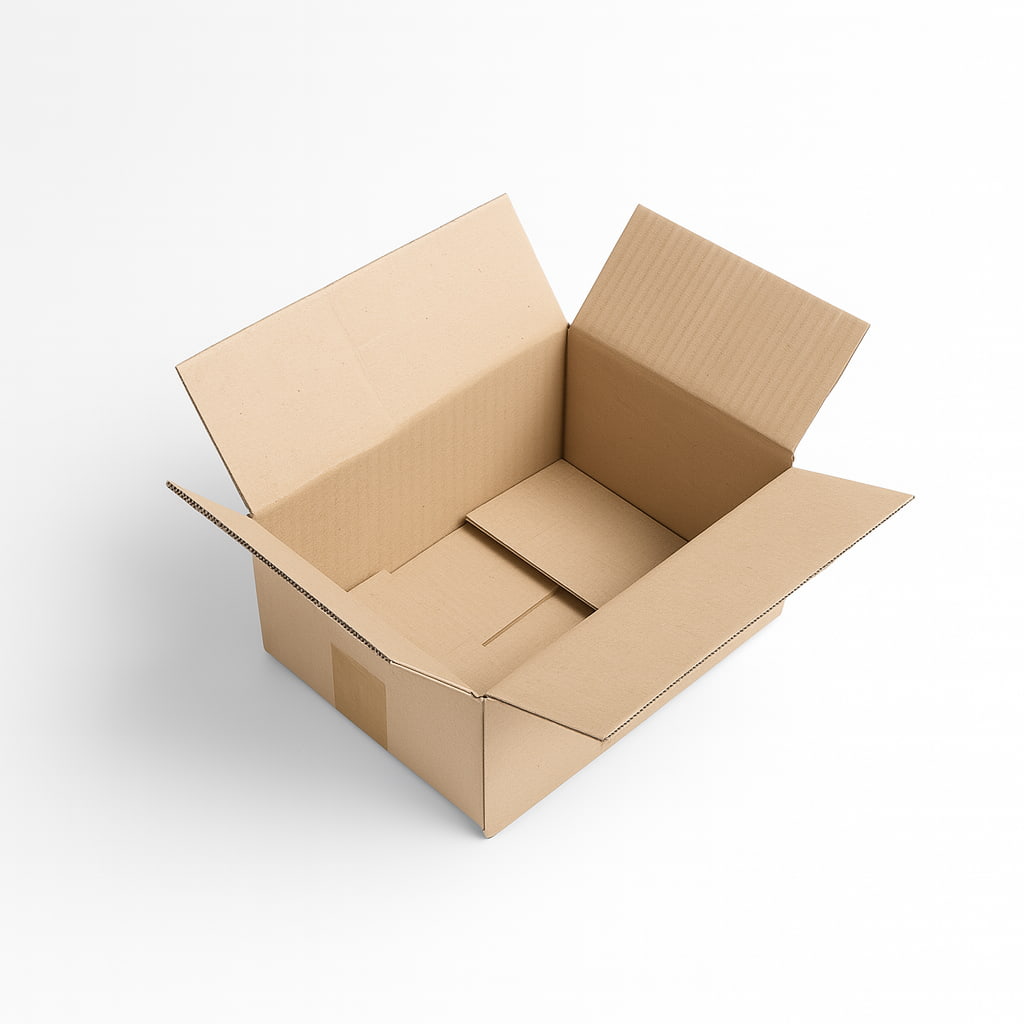
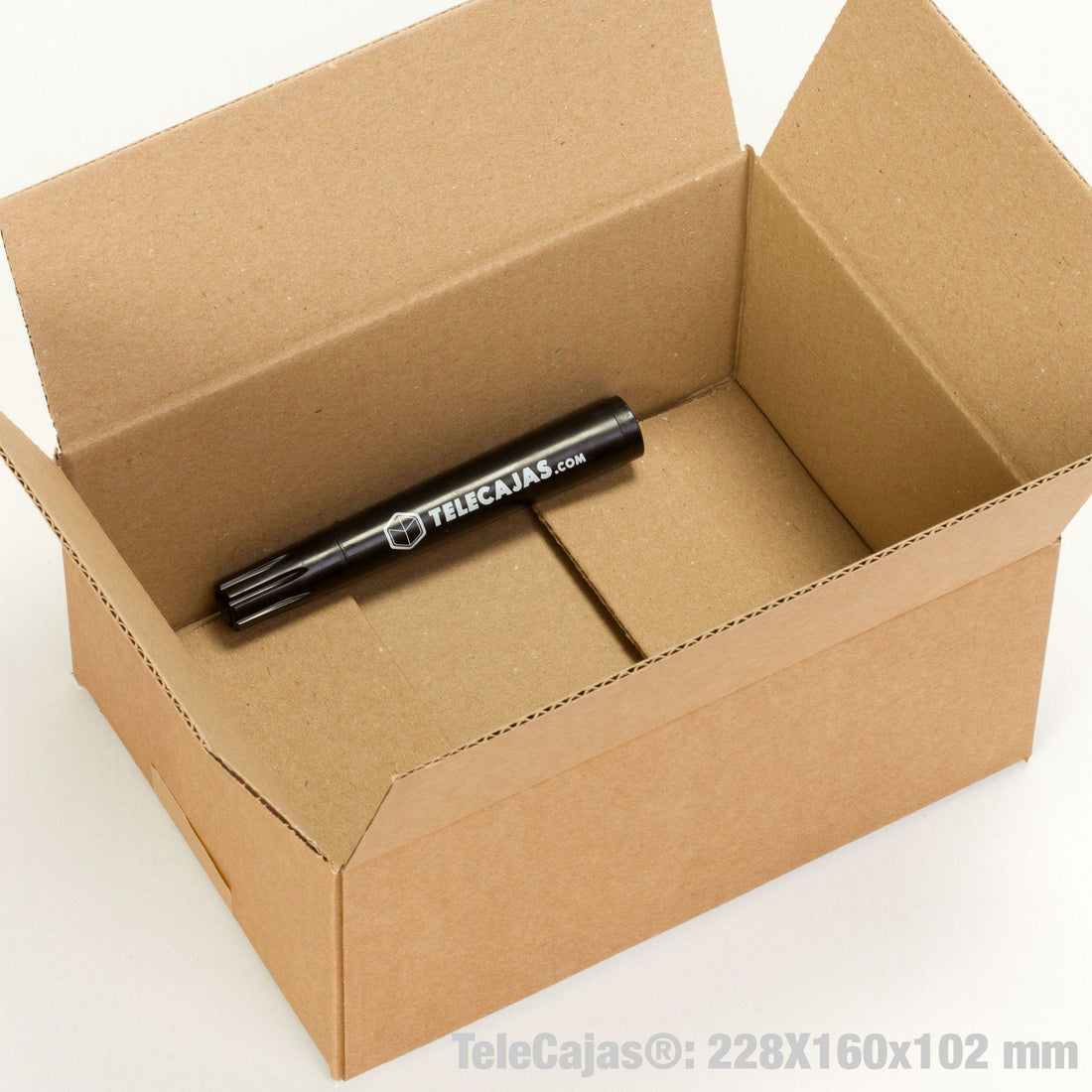
- A box that fits the product. Every centimetre of air is volumetric weight you pay for and void fill you have to buy. With more than 40 sizes of single-wall shipping boxes, there's almost always one that fits your product.
- Drop a band. Rates go in weight and size bands. Sometimes, switching from a 40×30×30 box to a 40×30×20 box takes you down a whole band. Our box size guide helps you fine-tune.
- Are you sure you need a box? For textiles or flat, not very fragile items, a padded envelope saves volume and money. We compare both in boxes vs envelopes for online shipping — and here are our shipping envelopes.
- Lightweight void fill. Kraft paper or bubble wrap weigh very little; adding useless weight "so it doesn't rattle" is expensive. More ideas in eco-friendly alternatives to bubble wrap.
If you ship often (e-commerce and B2B)
With more than 10-20 shipments a month, negotiate. All courier companies have volume rates, and comparison sites give you a benchmark to push for better prices. Standardising 2-3 box sizes for your whole catalogue simplifies negotiation, storage and void fill — it's one of the first things we recommend to our B2B customers.
Frequently asked questions
Which is cheaper, Correos or a private courier?
For non-urgent shipments by individuals, Correos is usually competitive. For frequent shipments or 24-48 hour delivery, private couriers and comparison sites tend to win. The right answer: compare your specific case, because it varies by zone and weight.
What is the volumetric weight of a parcel?
It's the theoretical weight you get by multiplying length × width × height in cm and dividing by the carrier's divisor (usually between 4,000 and 6,000). If it exceeds the actual weight, it's the one you're charged for.
How can I send a large, light parcel cheaply?
Reduce the volume: use the tightest-fitting box possible and, if the product allows it, send it disassembled or folded. With large, light parcels, volumetric weight rules — every centimetre counts double.
Does the box really affect the shipping price?
Yes, in two ways: it determines the volumetric weight and the size band. A well-chosen box can save you more than switching carriers.
The right box, delivered to your door
At TeleCajas we have more than 200 packaging products with prices including VAT, 24-48 hour delivery to mainland Spain and Portugal (Balearic Islands: slightly longer delivery times), free shipping on orders over €50 to mainland Spain/Portugal, and a flat €50 shipping charge to the Balearic Islands with no free-shipping threshold. Tell us what you're shipping and where, and we'll help you choose the right size on WhatsApp: +34 665 53 23 58.
View shipping boxes · View postal envelopes · View self-assembly boxes